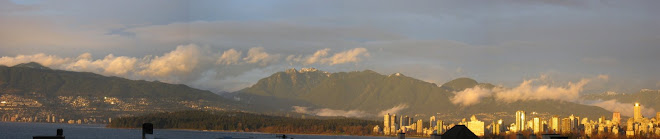
Friday, October 31, 2008

Oíche Shamhna Shona!


Seo i an oiche, Oiche Shamhna
when the veil between the worlds is thin. 
A time to acknowledge our ancestors. 
Darkness comes, and we light the fires.

Image source here.

Maybe we should send observers?

MediaScout: What would American elections be without allegations of electoral fraud? ... The potential for voting irregularities is frightening: electronic voting machines in West Virginia, Missouri, Nevada, Georgia and Colorado "flipping" votes; accusations of illegal voter-roll purges in Colorado, Georgia, Indiana, Louisiana, Ohio, Nevada and Michigan; Ohio, Florida and Wisconsin residents rendered ineligible to vote due to state database inconsistencies; official-looking pamphlets in Virginia instructing Democrats to vote the day after the election; Alabama residents incorrectly listed as felons, who are not allowed to vote; out-of-state students running into voting problems; Republican threats to challenge the eligibility of voters who lost their homes in the mortgage meltdown...

Hell to Pay
Elliot Cohen: Sen. John McCain's ideological ties to the Bush-Cheney administration have mostly passed beneath the radar of the mainstream media, but if McCain loses the presidential race to Barack Obama, his neoconservative legacy could erupt into the open with a force that should not be underestimated... This is a power-craving administration that will do what it can to retain power... Much will depend on the resolve of the American people and their collective commitment to democracy and the rule of law. We must stand firm against fear mongering, propagandizing, bogus legal challenges, attempts to declare the election invalid by fiat, and other tactics aimed at interrupting the constitutional transfer of power.
Image: AP

Thursday, October 30, 2008

'Despite the absurdity'


Asia-Pacific Journal: The United States and NATO can't be driven from Afghanistan militarily. Nor, however, can the Taliban be crushed in the foreseeable future... The US is going to be in Afghanistan for years to come. The only thing that's going to change is the objectives...

America's Afghanistan policy is falling into the hands of the realists, whose highest priority is maintaining a tractable and viable client in Kabul, keeping Afghanistan securely inside the US sphere of interest, holding onto a key chess piece in Central Asia's "great game" of energy resources and pipeline infrastructure, and offering the Pentagon another basing option to bedevil Russia and Iran.

Despite the absurdity of a multi-year, multi-billion dollar entanglement in Central Asia that will do little more than advance unilateral US security objectives, America's allies...will probably heed an American call for a redoubled effort...

Inside Pakistan, enthusiasm for US aims and tactics in the "war on terror" is conspicuously lacking. Support for Pakistani casualties on behalf of the stabilization of the US-backed regime in Kabul is virtually non-existent...

The US may be faced with the ironic choice of eliminating two South Asian democracies in the name of a continued struggle to bring freedom to the region. If the objective turns out to be merely to gain the advantage in a negotiated settlement with the Taliban forces we swore to destroy after 9/11, the irony will be deep -- and, to many, bitter.
Image in original.

Wednesday, October 29, 2008

That most exceptional nation

The End of International Law?
Robert Dreyfuss: A parallel new Bush doctrine is emerging, in the last days of the soon-to-be ancien regime, and it needs to be strangled in its crib. Like the original Bush doctrine -- which called for preventive military action against emerging threats -- this one also casts international law aside by insisting that the United States has an inherent right to cross international borders in "hot pursuit" of anyone it doesn't like.

Matt Reiner/Maya Schenwar: Regardless of the intent of the raid, Falk called the US action "a serious violation of international law," which allows for the use of violence only in self-defense. Yet [he] does not predict that any enforcement action will be taken, because international laws regulating the use of military force have been so undermined by the US and other nations in recent years. Falk called the raid "the latest display of Washington's disregard for the restraints of international law on the use of force."

Thom Shanker: On Monday, senior officials justified a weekend attack against a suspected Iraqi insurgent leader in Syria by saying the administration was operating under an expansive new definition of self-defense. The policy provided a rationale for conventional strikes on militant targets in a sovereign nation without its consent -- if that nation were unable or unwilling to halt the threat on its own.
Image source here.

Tuesday, October 28, 2008

Salvage, guilt, and prophecy

Andrew J. Bacevich: 
The Age of Triumphalism is over
When Bush entered office in 2001, America's status as sole superpower was self-evident and seemingly irrefutable. As the indispensable nation, the United States presided over a unipolar order. The emery board of globalization was sanding away the world's rough edges and gradually remaking it in America's own image. Commentators vied to find the appropriate historical analogy. The consensus: America was the new Rome, only more so... The central theme of the 2008 presidential election is change... In a real sense, however, change has already occurred. Even before the people have voted, they have spoken. The Age of Triumphalism has ended. The Age of Salvaging What's Left is upon us.

The question I ask myself is what will protect our country from collapsing under the burden of this enormous guilt of having systematically wrecked and destroyed another nation with such impunity? What will protect us from the awareness of being complicit in such unlawful and willful destruction? As the truth becomes impossible to ignore, are we to be transformed from a nation of sleepwalkers into a nation of insomniacs?... We much each ask ourselves, this week before the election, what, precisely, we will be willing to do to bring about the change necessary to end all the illegalities carried out in our name. For this question shall, of course, persist long after November 4.

The old assumptions and paradigms about capitalism and free markets are dead... This collapse is hard for us to fathom. We are still in shock and denial. We cling to old structures of meaning and outdated words... We have yet to realize that all our political science and economic textbooks have become junk... The flagrant corruption of our political system will become clearer as our initial shock wears off. The new America will be about the basics -- jobs, food, health care and a place to live... 

We will discard the old vocabulary and learn to speak in the fiery language of populism... The populist conflict will be a battle between a frightened and dispossessed majority and the corporations and elites who seek to ruthlessly cling to power and wealth... The elite will probably be forced to make an uncomfortable alliance with right-wing populists if they want to survive... We have begun a socialist experiment... The question is not whether we will build state socialism. That process has already begun. The only question left is whether this will be right-wing or left-wing socialism.
Image source here.

Monday, October 27, 2008

US attacks linked to election

Syria on Monday vehemently protested over a US attack on a border village that left eight civilians dead on Sunday, with the official press branding it a "war crime." Lebanese Prime Minister Fouad Siniora also condemned the US attack as "unacceptable" violation of Syrian sovereignty. Thabet Salem, a veteran Syrian political analyst, told Gulf News it was "nothing but part of John McCain's election campaign... They (the Republicans) want to show the world that things remain complicated in the Middle East and threats are still there, to justify continuation of the 'war on terror.' This gives strong long-term support to the McCain presidency."

Juan Cole: Scott McClellan has already told us that the Bushies are in campaign mode 24/7. I'd say that every single thing they are doing, whether raiding Pakistan or raiding Syria, is intended in some way to help the Republican Party in the election, in addition to whatever local military goal the action had.
Image: Nico Pitney/Huffington Post; 4000 dead make up Bush/McCain faces.

Saturday, October 25, 2008

Canada #13 in world press freedom

Only peace protects freedoms

RWB/RSF: It is not economic prosperity but peace that guarantees press freedom. That is the main lesson to be drawn from the world press freedom index that Reporters Without Borders compiles every year... Two aspects stand out in the index, which covers the 12 months to 1 September 2008. One is Europe's preeminence. Aside from New Zealand and Canada, the first 20 positions are held by European countries. The other is the very respectable ranking achieved by certain Central American and Caribbean countries. Jamaica and Costa Rica are in 21st and 22nd positions, rubbing shoulders with Hungar7 (23rd). Just a few positions below them are Surinam (26th) and Trinidad and Tobago (27th). These small Caribbean countries have done much better than France (35th), which has fallen again this year, this time by four places, and Spain (36th)... 

The economic disparities among the top 20 are immense. Iceland's per capita GDP is 10 times Jamaica's. What they have in common is a parliamentary democratic system, and not being involved in any war. This is not the case with the United States (36th domestically and 119th outside its own territory) and Israel (46th domestically and 149th outside its own territory)... The other disease that eats away at democracies and makes them lose ground in the ranking is corruption. The bad example of Bulgaria (59th), still last in Europe, serves as a reminder that universal suffrage, media pluralism and some constitutional guarantees are not enough to ensure effective press freedom. The climate must also favour the flow of information and expression of opinions. 
Rankings are here.

Friday, October 24, 2008

As planned

Pollsters: Conservative attack ads hurt voter turnout and democracy

Douglas Todd, in the Vancouver Sun: The attack ads the Conservative Party of Canada launched during this fall's election campaign not only convinced some declared Liberals not to vote for their party, even more Canadians turned off entirely from voting. Officials from Angus Reid Strategies revealed polling results...

Discussing the ethical implications of negative political advertising, Grenville argued his company's poll shows this year's hard-hitting Conservative ads were part of a disturbing trend that is "poisoning the well" of Canadian politics. "Attack ads can often work in the short term. They can give you a short boost. But they reduce the number of people who want to vote. They reduce participation in the democratic process. They poison the system." ...

The Conservative Party of Canada benefited from a low voter turnout on October 14, the pollsters said... Many supporters of Canada's centre-left parties tend to be more idealistic than Conservatives. Idealists, people who dream of a better world, are prone to drop out of the electoral process if they believe that it has become corrupt or unethical... The most common words those surveyed associated with the TV ads were "disgust," "lies," "unethical" and "unCanadian." ...

Maintaining that almost two decades of vicious political attack ads in the U.S. have made a "farce" of democracy and voter turnout south of the border, Grenville said he hopes Canadians find a way to counteract negative campaigning... "It's up to the people of Canada to say they're sick of this... to say they're sick of being misled and lied to and having politics driven down into the mud."... The Conservatives are unlikely to take a less nasty approach in their advertising when the Liberals elect their next national party leader. "They're probably preparing their attack ads right now."

Thursday, October 23, 2008

What is stirring: near and far

... For me the most moving moment came when the family in front of me, comprising probably 4 generations of voters (including an 18 year old girl voting for her first time and a 90-something hunched-over grandmother), got their turn to vote. When the old woman left the voting booth she made it about halfway to the door before collapsing in a nearby chair, where she began weeping uncontrollably. When we rushed over to help we realized that she wasn't in trouble at all but she had not truly believed, until she left the booth, that she would ever live long enough to cast a vote for an African-American for president.

... This vote is 400 years in the making. Pollsters don't seem to take that into account. My 82-year old mother had to be rushed to the hospital last Sunday -- congestive heart failure. One of the first things she asked when the oxygen mask was removed was "Will someone please get me an absentee ballot. I don't want to miss this election." ... This is not only a vote for a candidate; it is a vote for America, the America we heard about from our parents and their parents, across the generations. Freedom and Liberty sound so trite these days, but I remember those words spoken by my Dad on his way to the March on Washington.


Wednesday, October 22, 2008

Art and the Feminist Revolution


Image: Magdalena Abakanowicz, Red Abakan, 1969, sisal and mixed media.

WACK! Art and the Feminist Revolution
Vancouver Art Gallery, through 11 January 2009
Curator: Connie Butler

Few social movements more profoundly marked the end of the last century than feminism. In the space of a generation, feminism transformed social relations, personal identities, and institutional structures. While many of feminism's victories were hard-won and, indeed, remain contested, it is difficult to overstate the movement's impact. The feminist revolution in art was no less radical and transformative than the social movement from which it drew strength. The very terms of current artistic practice are made possible in numerous respects by the groundbreaking works produced by feminist artists in the 1960s and 70s. However, while the social impact of the feminist movement is broadly recognized, the extraordinary contributions of feminism in art are considerably less understood and appreciated... 

"WACK!" offers the first international survey of a remarkable body of work that emerged from the dynamic relationship between art and feminism in and around the 1970s and includes 119 artists representing twenty-one different countries. -- Jeremy Strick, Director VAG

A salute to my mother. She would have been 93 today.

Tuesday, October 21, 2008

Apply as appropriate

In the bloodless wars of politics, the wounds are to pride and place. In such activity, men easily exaggerate their relevance to it. More than that, once caught up in it, the significance of politics becomes disproportionate to their lives. To many, I suspect, their importance to themselves, as to others, lies in their being politicians. One would wish it to be the other way round -- that their importance as politicians lies in men being themselves, true to their best impulse and finest ideals, less concerned with the victory of a party as they are more concerned with the survival of their own personality and nature. -- Dalton Camp, Gentlemen, Players and Politicians (1970), #52 in The LRC 100: Canada's Most Important Books.

Monday, October 20, 2008

Obama Draws 100,000 in Missouri


"It comes down to values," Obama continued. "In America, do we simply value wealth -- or do we value the work that creates it? For eight years we've seen what happens when we put the extremely wealthy and well-connected ahead of working people."

Paul Woodward: Karl couldn't have put it better, yet for so many Americans who've fallen down the rabbit hole of the myth of free enterprise, the freedom of wealth creation has been abstracted from the context within which it occurs. Work is turned into a gift for those who most desperately need it, bestowed by those who claim the largest portion of its rewards. But that isn't really the work we believe in.

The GOP could learn a thing or two from the South Africans and the Israelis: If you believe in and want to sustain a divided society, you should only cling to such a position for as long as you can deprive your opponents of political rights... As so often happens, once the dominant power loses its dominance, it clings to the tactics of domination -- even when they have become self-defeating. 
Image: Linda Davidson/The Washington Post.

Sunday, October 19, 2008

Close to home

Alice Munro is among the major writers of English fiction in our time. She's been accorded armfuls of super-superlatives by critics in both North America and Britain, she's won many awards, and she has a devoted international readership. Among writers, her name is spoken in hushed tones. She's the kind of writer about whom it is often said -- no matter how well known she becomes -- that she ought to be better known...

Through Munro's fiction, Sowesto's Huron County has joined Faulkner's Yoknapatawpha County as a slice of land made legendary by the excellence of the writer who has celebrated it, though in both cases 'celebrated' is not quite the right word. 'Anatomised' might be closer to what goes on in the work of Munro, though even that term is too clinical. What should we call the combination of obsessive scrutiny, archaeological unearthing, precise and detailed recollection, the wallowing in the seamier and meaner and more vengeful undersides of human nature, the telling of erotic secrets, the nostalgia for vanished miseries, and rejoicing in the fullness and variety of life, stirred all together? ...

Given a choice between being a person who does good works but has inauthentic feelings and is numb at heart and being one who behaves badly but is true to what she really feels and is thus alive to herself, a Munro woman is likely to choose the latter; or, if she chooses the former, she will then comment on her own slipperiness, guile, wiliness, slyness and perversity. Honesty, in Munro's work, is not the best policy: it is not a policy at all, but an essential element, like air. The characters must get hold of at least some of it, by fair means or foul, or -- they feel 
-- they will go under.
Image by Jim Bodeen: Kits Beach, Vancouver; across the street from Munro's downstairs rooms, and close to mine. See "Alice Munro's Vancouver."

Saturday, October 18, 2008

Suppression: markets, or freedom?

Thomas Walkom: The great question that remains is what the U.S. will do. It's never been the pure private-enterprise nation that it claims to be. Historically, government has played a key role in American economic development and continues to do so, usually under the guise of military spending.


But more than any other nation, America cleaves to the ideology of free markets... a deep-seated belief in market capitalism that is central to the American world view.

Logically, as a democratic nation, the U.S. should favour social capitalism over its more authoritarian counterpart. But as the presidency of George W. Bush has demonstrated, there is an anti-democratic, anti-civil libertarian strain in American thinking that clever politicians can easily exploit.

Faced with a choice between suppressing markets to encourage freedom or suppressing freedom to encourage markets, what would Americans do? Would they really follow the road of China rather than, say, Sweden?

It's hard to imagine. But then it was hard to imagine the nation that produced the formidable U.S. Constitution and its Bill of Rights rallying behind Bush when he authorized torture, illegal war and the obscene prison camp at Guantanamo Bay.

Image source here.