Thursday, July 8, 2010

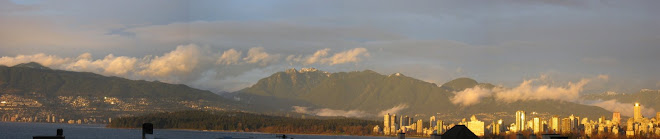
'We live on the edge of the world'

Here, Now
Stephen Marche, in the Literary Review of Canada: Writing matters more in small countries, and Canada is a small country. Literature has to be a national affair. And we belong to Canada, which is a very peculiar nation in a very peculiar position. Perhaps even in a unique position. Canada exists between the United States and the North. By the United States I mean... the global capitals of money, culture, power and technology... and by the North I mean the impossible nothingness...

We are stuck between the devil and deep blue sea, between the world and all its demonic temptations, sex, music, the transmorphic power of money, and the North, which is death, which is the wasteland, which mocks New York. You cannot pretend in the middle of a northern storm when the snow seems to cover the entire surface of the earth that the new Vampire Weekend matters. You must face, in a way that most cultures other than desert cultures never have to face, the reality of total death, ultimate death, the evidence of meaninglessness that extends everywhere to the horizon, the oblivion that attends on all human action.

Canadians are broken between these two realities. Politically this situation can be, at times, disastrous. But in writerly terms, it is luxurious. We live on the edge of the world. It gives the best view... Our brokenness in time and place is our greatest strength.

Wednesday, July 7, 2010

Portrait of the oldest light

Planck telescope reveals ancient cosmic light


BBC News: The picture is the first full-sky image from Europe's Planck telescope which was sent into space last year to survey the 'oldest light' in the cosmos... It shows what is visible beyond the Earth to instruments that are sensitive to light at very long wavelengths -- much longer than what we can sense with our eyes...

Dominating the foreground are large segments of our Milky Way Galaxy. The bright horizontal line running the full length of the image is the galaxy's main disc -- the plane in which the Sun and the Earth also reside. This is where most stars in the Milky Way form today; but because this picture only records light at long wavelengths (microwaves to the very far infrared) what we actually see are not stars at all.

Rather, what we see is the stuff that goes into making stars -- lots of dust and gas. Of particular note are the huge streamers of cold dust that reach thousands of light-years above and below the galactic plane...

But as beautiful as the Milky Way appears, its emission must be removed if scientists are to get an even better view of its mottled backdrop, coloured here in magenta and yellow. This is the famous cosmic microwave background (CMB) radiation... The CMB is the 'first light.' It is the the light that was finally allowed to move out across space once a post-Big-Bang Universe had cooled sufficiently to permit the formation of hydrogen atoms. Before that time, scientists say, the cosmos would have been so hot that matter and radiation would have been 'coupled' -- the Universe would have been opaque.

To see how the Planck sky differs from views obtained at other wavelengths, visit the Chromoscope website.
Image source here.

Tuesday, July 6, 2010

No justice, no peace

It's obvious, go talk to the Islamists
The Daily Star (Lebanon): Two intriguing reports from the United States and Afghanistan in the past few days suggest that more realism may be creeping into the toolkit...

In Afghanistan, President Hamid Karzai is reported to have approved a plan designed to reintegrate low-level Taliban foot soldiers and commanders into the government forces, while simultaneously making peace with more senior leaders and their backers in Pakistan... Karzai sensibly assumes that foreign military power cannot prevail against armed nationals who believe they are fighting to liberate their country from foreign occupation...

In the United States... a team of senior intelligence officers at US Central Command (CENTCOM) has just issued a report titled 'Managing Hizbullah and Hamas,' that questions the current US policy of isolating and marginalizing these movements, and instead suggests a variety of approaches that would integrate them into their Lebanese and Palestinian mainstreams... The report says that while Hizbullah and Hamas 'embrace staunch anti-Israeli rejectionist policies,' the two groups are 'pragmatic and opportunistic.'...

Islamist groups of all kinds -- from the docile reciters of holy scripture and purveyors of charity to children, to the militant resistance fighters of Hamas and Hizbullah, to the occasional Al-Qaeda-type terrorists -- are deeply driven by practical, identifiable grievances. These grievances are anchored in three main spheres: national socio-economic conditions, the autocratic policies of national governments and out-of-control security agencies in the Arab-Asian region, and the policies of foreign governments and armed forces (mainly American and Israeli) in the same region.

Addressing and ultimately relieving those underlying grievances is the key to dealing with these Islamist groups, most of which will transform or wither into other, non-militant organizations in the wake of redress of grievances. It is heartening that some people in positions of authority and power in Afghanistan, NATO and the United States armed forces are now considering this rational approach to conflict-resolution, which seeks to promote peace and stability by politically addressing basic needs of justice and dignity.

What took them so long to embrace the obvious?
Image source here.

Monday, July 5, 2010

Map of the day: Water Security


The index is one of over 100 created by Maplecroft to identify risks... and has been developed by measuring the four key areas surrounding the issue. These include: access to improved drinking water and sanitation; the availability of renewable water and the reliance on external supplies; the relationship between available water and supply demands; and the water dependency of each country's economy...

'Climate change the increasing demands from population growth will cause a worsening of water stress over the coming decades,' said Dr Anna Moss, environmental analyst at Maplecroft. 'There is a risk of water stress exacerbating future risks of conflict, although there is evidence that water scarcity may also help foster cooperation instead, within and between states and up to regional levels.'...

Regions particularly vulnerable to a lack of water security include the Middle East and the CIS countries of the former Soviet Union... Africa is also acutely affected by the issue, with 15 countries in the high and extreme risk categories. The countries with the most stable supplies of clean water include Iceland (165), Norway (164) and New Zealand (163).
Image source: Maplecroft

Sunday, July 4, 2010

Tibetans quickly evolved for high altitudes

Tibetan DNA study reveals human evolution
CNN: Ethnic Tibetans' ability to thrive in high altitudes with low oxygen is the fastest genetic change ever observed in humans, according to a study published in the journal Science... The evolutionary biologists say the results of their study, which compares the genomes of 50 Tibetans and 40 Han Chinese, shows that Tibetans rapidly developed a unique ability to survive in altitudes above 13,000 feet, where oxygen levels are about 40 percent lower than at sea level.

The study said that Tibetans evolved to adapt to high altitudes after splitting off from the Han about 2,750 years ago. The study identified more than 30 genes with DNA mutations that have become more prevalent in Tibetans than Han Chinese, nearly half of which are related to how the body uses oxygen.

'For such a very strong change, a lot of people would have had to die simply due to the fact that they had the wrong version of a gene,' said Rasmus Nielsen, a professor of integrative biology at [University of California] Berkeley who let the statistical report.
Image: Tibetan herders; source here.

Wednesday, June 30, 2010

On G8, G20, deficit and debt: 'Money is not real'

Jonathan Schwartz: Much of the world's elite understand exactly what they're doing:... use the economic catastrophe they themselves created as a pretext to kill the welfare state they've despised for 65 years.

James Galbraith, interviewed by Ezra Klein: We should be focusing on real problems and not fake ones... The idea that funding difficulties are driven by deficits is an argument backed by a very powerful metaphor, but not much in the way of fact, theory or current experience.

Digby: 'Money' is more real to our ruling class than are human beings.


DEBT, UNSUSTAINABLE LEVELS OF
National debts are treated today as if they were unforgiving gods with the power to control, alter and if necessary destroy a country. This financial trap is usually presented as if it were peculiar to our time, as well as being a profound comment on the profligate habits of the population...

9. A nation cannot make debts sustainable by cutting costs. Cuts may produce marginal savings, but savings are not cash flow...

11. Civilizations which become obsessed by sustaining unsustainable debt-loads have forgotten the basic nature of money. Money is not real. It is a conscious agreement on measuring abstract value. Unhealthy societies often become mesmerized by money and treat it as if it were something concrete. The effect is to destroy the currency's practical value.

12. An obsession with such false realities and with debt repayment indicates a linear, narrow managerial approach to economics. The management of an economy is the profession of finance-department technocrats, economists and bankers. Their approach is quite naturally one of continuity. This is a means of denying failure.

To treat money or debt as a contractual matter -- therefore open to non-payment or to renegotiation -- would mean treating the managerial profession as of secondary importance... What sensible people might see as originality or practicality, financial experts see as a threat to their professional self-pride...

Money is first a matter of imagination and second of fixed agreements on the willing suspension of disbelief. In other words, it is possible to approach the debt problem in quite different ways... What is difficult for a single country in contemporary circumstances is easy for a group, particularly if that group speak for the developed world. See: ETHICS.

Tuesday, June 29, 2010

As if we didn't have enough to worry about

The end of the world as we know it
Astronomer Chris Impey, in The Independent: What kind of catastrophe would it take to end the world?

Astronomical intruders provide a potentially serious threat... Every century or so, a 10-meter meteor slams into the Earth with the force of a small nuclear device... Every few thousand years Earth can pass through unusually thick parts of the debris trail of comets, turning the familiar light show of a meteor shower into a deadly firestorm. Roughly every 100,000 years, a projectile hundreds of meters across unleashes power equal to the world's nuclear arsenals. The result is devastation over an area the size of England, global tidal waves (if the impact is in the ocean), and enough dust flung into the atmosphere to dim the Sun and kill off vegetation. That could ruin your day.

Then there's the "Big One.' About every 100 million years, a rock the size of a small asteroid slams into the Earth, causing global earthquakes, kilometre-high tidal waves, and immediately killing all large land animals. Creatures in the sea soon follow, as trillions of tons of vaporised rock cause drastic cooling and the destruction of the food chain based on photosynthesis...

When massive stars exhaust their nuclear fuel, the result is a titanic explosion called a supernova. The dying star brightens to rival an entire galaxy and emits high-energy particles that can destroy the ozone layer of a planet like Earth if it occurs within 30 light years...

A supernova is a small squib compared to a hypernova. In this dramatic and rare event, the violent collapse of a very massive star ejects jets of gas and high-energy particles at close to the speed of light, and for a few moments the star outshines the entire universe in gamma rays. If a hypernova went off within 1,000 light years, and Earth was within the narrow cone of high-energy radiation, we'd experience an immediate global conflagration.

On longer time scales, attention turns to the sheltering Sun. Our constant companion is midway through its conversion of hydrogen into helium. In about 5 billion years, its guttering flame will be extinguished. The Sun's diffuse envelope will engulf the Earth and turn it into a lifeless cinder... The biosphere will actually die much sooner. The Sun burns hot as it gets older, and in 500 million years a turbocharged version of global warming will turn the Earth into a global desert...

The end of the Milky Way will come slowly, in a stellar lockdown... In galaxies across the universe the lights will gradually go out, and after tens of trillions of years the universe will have faded to black...

Fifteen years ago, it was discovered that the cosmic expansion is getting faster. The cause is inferred to be dark energy -- a manifestation of the pure vacuum of space that has an effect opposite to gravity... If dark energy grows, it will cause the universe to unravel in about 20 billion years in a crescendo called the "Big Rip.' First galaxies, then stars, and finally atoms will be torn asunder... Nothing can survive; it's an outcome of crushing finality.

Absent the big rip, cosmic acceleration will steadily remove galaxies from view... On even longer time scales, familiar gravitational structures become unglued... Planets detach from their dead stars and drift through interstellar space... The proton is not stable and will decay... The decay of protons heralds a final drawn-out phase of disintegration... as everything falls apart...

We imagine the last inhabitants of the universe huddled around the evaporative glow of gamma rays from the last black hole, telling timeless stories about time. It was fun while it lasted.

Image source here.

Sunday, June 27, 2010

Spike in Arctic temperatures 'may be imminent'

Vancouver Sun: A world-renowned Ellesmere Island fossil site has shed startling new light on how warm the Canadian Arctic was about four million years ago -- and just how hot it could get in the coming decades.

Six researchers from Canada, the United States and the Netherlands have announced their findings after probing fossilized wood and the well-preserved remains of prehistoric plants and soil bacteria from Ellesmere's Beaver Pond site, a paleontological time capsule near the Eureka science station on Canada's northernmost land mass...

The team has shown that the High Arctic locale once had a relatively balmy average annual temperature of 0 C -- about 19 degrees warmer than today. The clearer picture of the ancient Arctic has potentially important -- and worrisome implications for how quickly and severely the region could witness a temperature spike given current climate-change trends, the researchers warn... 'Our results indicate that a significant increase in Arctic temperatures may be imminent.'...

The Beaver Pond site is only about four million years old and dates from a time when Ellesmere Island was at roughly the same High North latitude it is today. Furthermore, the amount of carbon dioxide in the atmosphere during that time, the Pliocene era, was almost identical to the elevated CO2 levels of today's warmed-up globe -- making the Beaver Pond site an unusually accurate 'proxy' for the 21st century Arctic...


Image sources here and here.

Saturday, June 26, 2010

Maps of the day: Nuclear explosions since 1945

'1945-1998' by Isao Hashimoto
This is a screen shot. Go here for 'a haunting visualization' of 2053 nuclear explosions starting with the Trinity test at Los Alamos.


Tyler Durden, at Zero Hedge: Who needs a wartime nuclear exchange when you have peaceful countries nuking the gamma rays out of their own sovereign territories... with the US nuking the state of Nevada and its immediate neighbors about one thousand times. And keep in mind -- the fallout does not just miraculously disappear.


Idealist: If you're looking for fallout maps, you won't find any such map here or anywhere... Why? Because the executioners, to the best of their satisfaction, don't want you to see them. What you can and will see -- if you seek it -- are bits and pieces of the destruction: a high reading of radioactivity in wheat or milk here, or air over there, a trajectory map here, and a rare truthful analysis there. Put them together and you have what would happen in a small-but-non-mutually-destructive nuclear war (that we erringly refer simply to as the Cold War): the radioactive fallout circling -- for eons -- around the Earth and within her biosphere.

Friday, June 25, 2010

Afghanistan: 'declare a victory and leave'

Why the Taliban is winning in Afghanistan
William Dalrymple: During lunch, as my hosts casually pointed out the various places in the village where the British had been massacred in 1842, I asked them if they saw any parallels between that war and the present situation. 'It is exactly the same... Both times the foreigners have come for their own interests, not for ours.'... 'Since the British went, we've had the Russians... We saw them off, too.'... 'Next, it will be China. This is the last days of the Americans.'...

After the jirga was over, one of the tribal elders came over... 'Last month,' he said, 'some American officers called us to a hotel in Jalalabad for a meeting. One of them asked me, 'Why do you hate us?' I replied, 'Because you blow down our doors, pull our women by the hair and kick our children... We will fight back, and we will break your teeth, and then your teeth are broken you will leave, just as the British left before you. It is just a matter of time... In truth, all the Americans here know that their game is over. It is just their politicians who deny this.'

Gwynne Dyer: But what if Obama, Biden and Eikenberry really think (a) that the war in Afghanistan is unwinnable, and (b) that it isn't important for the United States to win it anyway?... The best way to end the Afghan war is simply (as they used to say about Vietnam) to 'declare a victory and leave.' But they cannot say this out loud in the United States... So if [Obama] really wants to extract Americans,... then he is condemned to do so by subterfuge. He must engineer an apparent but temporary military success... and get out while the going's good. This is exactly how President Richard Nixon and Secretary of State Henry Kissinger got the United States out of the Vietnam War in 1973... If the Taliban understand his implicit message to them, they let him have a temporary 'victory' in order to get him out.

Michael Hastings: It's going to look more like Vietnam than Desert Storm. 'It's not going to look like a win, smell like a win or taste like a win,' says Maj. Gen. Bill Mayville. 'This is going to end in an argument.'... 'If Americans pulled back and started paying attention to this war, it would become even less popular,' an adviser to McChrystal says... The very people that COIN seeks to win over -- the Afghan people -- do not want us there... So far, counterinsurgency has succeeded only in creating a never-ending demand for the primary product supplied by the military: perpetual war... Winning, it would seem, is not really possible.

What story are you working on now -- the Kandahar offensive?
That's the story I've been working on.
How is that offensive going?
I think it's in trouble, in serious trouble... We have this problem where we told our Afghan partners, if you don't want it, then we don't have to do it, and they said no and we said, well, we're doing it anyway. Now we're in a situation where we are eventually going to do it and we don't have the popular support of the locals... Petraeus is sort of a genius. He managed to turn what could have been catastrophic defeat in Iraq into a face-saving withdrawal. That's his mission in Afghanistan, to make it look like we didn't get run out.
Image source here.

Thursday, June 24, 2010

No oil on BC's coast? It's already happening

The Tyee: Flow of tar sands crude to Burrard Inlet rising, and will more than double: Kinder Morgan... If that happens, the further rise in tanker traffic will compound the risk of an environmental catastrophe in the Gulf Islands, potentially impacting the Fraser Estuary and San Juan Islands... traffic that may reach 150 vessels a year... 'People say they don't want oil tankers moving product off the west coast and I tell them it's happening now, guys, the horse is out of the barn.'

The Province: So why has there been so little public discussion about this development? Each of these tankers carries enough crude to exceed the infamous Exxon Valdez spill by several times... One has to question the wisdom of allowing a major crude-oil terminal to evolve inside a busy harbour and especially beyond the Second Narrows, an extremely narrow and shallow tidal passage.

The Tyee: These forces include: China's hunger for oil and investment in the Alberta oil sands. Washington's emerging resolve to regulate against high carbon emitting fuels like the oil sands. And Ottawa's resulting desire to find alternative Asian markets for oil sands oil. Add in stolid First Nations resistance to a proposed pipeline from the tar sands to Kitimat... Vancouver, the hometown of Greenpeace and the 'greenest city in the world' -- has quietly become a major outflow for controversial Alberta syncrude. The global forces driving these changes are converging on a narrow stretch of treacherous water.

The Tanker Threat to Georgia Strait and Vancouver
The Tyee: We're not talking of refined product here; we're not even talking about crude oil; we're talking the sludge, the sandy, oily mess that's coming out of the tar sands. The consequences of a catastrophe would be enormous. The Vancouver harbour would be closed indefinitely... Even if the ships all get out of Vancouver, the consequences of a disaster from there until they hit the high seas... are incalculable. The spillage would be aggravated by the large tides, which move four times a day, and by the wind with the effect of the Fraser River added to it.

The Georgia Straight: Rex Wyler, who is with a citizen's group called No Tanks: 'If you still have tankers coming in and out of Burrard Inlet, an oil spill anywhere along the coast is a problem.'... Two years ago, certified management accountant Bill Gannon noticed tankers traveling through Burrard Inlet. Gannon prepared a 'risk assessment' (.pdf)... 'Since then, local tanker traffic has increased to about two tankers per week.'

The Georgia Straight: 'Before I went, all I really had was a gut feel about this kind of stuff... What I've learned since I've been here is this: we don't currently possess the technology to clean up our own messes. And until we do, I don't want this around me.'

No Tanks website here.
Image source here: Second Narrows Bridge in Burrard Inlet received highest hazard rating by Coast Guard.

Wednesday, June 23, 2010

One-third of Americans would choose Canada

Most would move to Canada, if they could: Poll
Vancouver Sun: A majority of people from around the world would move to Canada is presented with the opportunity... The online survey of over 18,000 people in 24 countries, conducted by Ipsos Reid, showed that 53 percent of people... would like to live in Canada, if they could. Almost one-third (30 per cent) of Americans would choose Canada too, according to the poll results.

Eight in ten respondents (79 per cent) said they think Canadians enjoy one of the best qualities of life anywhere in the world. Seventy-two per cent believed that Canada is welcoming to immigrants... Seventy-nine per cent described Canada as being 'tolerant of people from different racial and cultural backgrounds.'

Globe and Mail: Among those who have completed only elementary education, the U.S. outstrips Canada by a considerable margin. But among those who have completed secondary education, Canada leads... The difference in education between immigrants to the two countries may explain why Canadian immigrants do better financially... The gap between immigrant income and the national median income is also more pronounced in the United States...

'The better-educated cohort may be more disposed to coming here because they feel opportunity is not as strong in the U.S.... We have a stronger support network, a stronger safety net, which may be a powerful incentive,' Dr. Jedwab said. 'Part of it also has to do with people with a greater knowledge of Canada... '[The findings] say something about the way Canada is perceived abroad by more educated segments of the planet.'
Image source here.