Thursday, June 16, 2011

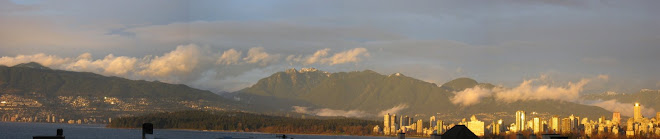
Canadian immigrants #1 in assimilation

Manhattan Institute for Policy Research:

Jacob L. Vigdor, Adjunct Fellow: This report... introduces a series of comparisons among countries, using data from the United States and ten other countries drawn from the period 1999-2001. Although these international data are slightly dated, they are the most recent comparative data available, and few major changes are likely to have taken place since. The study's focus is the comparative progress individual ethnic groups, particularly immigrants from nations with predominantly Muslim populations, have made in the destination countries where they have chosen to reside...
  • Immigrants from Canada rank first in terms of overall assimilation, largely as a consequence of their high rate of naturalization...
  • Muslim immigrants, identified by data on religion in some nations and by country of birth in others, are most integrated in Canada...
Two facets of Canadian immigration policy may help explain the rapid integration of foreigners into Canadian society. First, the path to citizenship in Canada is short and easily traveled. Foreigners face a three-year residency requirement (it is five for legal permanent residents in the United States and as many as twelve in some European countries), and the nation has taken a liberal stance toward dual citizenship since 1977.

Second, Canadian immigration policy places a distinct emphasis on attracting skilled migrants. Thirty percent of foreign-born adults in Canada have college degrees, while the rate is 23 percent in the United States and 10 percent in Spain and Italy. Educational attainment is not a factor in the international version of the assimilation index, but the link between immigrants' level of education and their degree of assimilation is strong.

Full report, with graphs, is here.
Image source here.

Tuesday, June 14, 2011

Eating money

The Midas Touch
Stomachs Too Big to Fail?

Lewis H. Lapham, at TomDispatch (from the summer 'Food' issue of Lapham's Quarterly):

The history of food reaches across a span of four thousand years, during most of which time the global economy is agrarian. Prior to the twentieth century, the changes were relatively slow in coming. Humankind is the tenant of nature, food the measure of both humanity's wealth and wellbeing. The earliest metal currencies (the shekel, the talent, and mina) represent weights and units of grain. Allowing for cultural difference and regional availability, the human family sits down to meals made of what it finds in the forest or grows in the field, the tables set from one generation to the next in accordance with the changing of the seasons and the benevolence of Ashnan or Ceres.

The contract between humankind and nature remains in force for as long as it is understood which one is the tenant and which the landlord. Over the course of millennia human beings discover numerous ways of upgrading their lot -- cooking with fire, domesticating animals and plants, bringing the tomato from Mexico to Spain, pepper from Sumatra to Salem, constructing the chopstick, the seine net, and the salad fork -- but the world's population stays more or less in balance with the world's agriculture because the landlord is careful about matching supply and demand...

The contract between landlord and tenant doesn't come up for review until the seventeenth-century plantings of capitalist finance give rise to the Industrial Revolution. Human beings come to imagine that they hold the deed to nature, persuaded that if soundly managed as a commercial real-estate venture, the property can be made to recruit larger armies, gather more votes, yield more cash. Add to the mechanical staples (John Deere's cast-steel plow, Cyrus McCormick's reaper) the twentieth century's flavorings of laboratory science (chemical pesticides, synthetic gene sequences), and food becomes an industrial product subsumed into the body of a corporation.
Image source here.

Sunday, June 12, 2011

Tagish Lake space rock holds seeds of life

B.C. meteorite suggests life on Earth came from space
Vancouver Sun: The space rock first made headlines in 2000, when it streaked across the northern skies and crashed to Earth along the B.C.-Yukon border... Now the rock is in the spotlight again, providing what scientists say are important new clues about the building blocks of life and how they formed in the early universe more than 4.6 billion years ago.

'What we are seeing are the ingredients of life,' said planetary geologist Christopher Herd at the University of Alberta. Herd and a team from NASA and several U.S. universities report in the journal Science that they have found several types of organic molecules of 'prebiotic importance' in fragments of the meteorite. And they say some of them were likely shaped by processes on their home asteroid billions of years ago.

This indicates that there may have been a 'Goldilocks window' when organic molecules formed on asteroids and may have seeded Earth and other newly formed planets with the chemical precursors for life to emerge...

The Tagish Lake meteorite is described as the most pristine ever recovered... Most meteorites that fall to Earth are made of nickel or iron. The Tagish Lake space rock is the much rarer carbonaceous chondite variety... The analysis turned up a dozen different amino acids, which are used to build proteins and other molecules common in cell walls... One also appears to contain evidence of amino acid synthesis on the asteroid. Herd said the best explanation he and his colleagues can come up with is that organic material was altered in parts of the asteroid by percolating water.
Image source here.

Friday, June 10, 2011

Ice melt in the northern Arctic islands

Ice Loss in the Canadian Arctic Archipelago


Earth Observatory: The maps above show ice loss from surface melting for the northern portion of the archipelago from 2004-2006 (left) and 2007-2009 (right). Blue indicates ice gain, and red indicates ice loss... The Canadian Arctic Archipelago generally receives little precipitation, and the amount of snowfall changes little from year to year. But the rate of snow and ice melting varies considerably, so changes in ice mass come largely from changes in summertime melt. During the 2004 to 2009 study period, the Canadian Arctic Archipelago experienced four of its five warmest years since 1960.

Wednesday, June 8, 2011

'Huge swaths' of Canada inaccessible by 2050

Canada has 'more to lose that it realizes': global warming report on Arctic

Postmedia News: 'Canada is going to be feeling the harsh edge of the sword more strongly than other Arctic states,' says Scott Stephenson, lead author of the study that forecasts that the Northwest Passage will be the last Arctic shipping route to become ice free. It also predicts huge swaths of Canada's landscape will become inaccessible by road by mid-century.

The implications could be 'profoundly negative' for remote communities and mining, energy and timber operations that now depend on winter ice roads, says the study by researchers at the University of California, Los Angeles... published in the journal Nature Climate Change... 'This study would suggest that Canada has more to lose than it realizes,' [said] senior author Laurence Smith, a UCLA climate researcher...

Remote communities that rely on winter roads will have to rely more on air cargo, which will 'dramatically' increase the costs of food and supplies... The 400,000 square kilometres that Canada is projected to lose access to is a huge area 'with all kinds of untapped potential,' says Smith. While building permanent roads might be an option in some areas, the costs will be high... Temperatures are expected to keep climbing well beyond 2050, making more of Canada's soggy northern landscapes inaccessible by land vehicles.

Smith says 'the other surprise for Canada is that the Northwest Passage... is one of the coldest parts of the Arctic, where water circulation is not as 'dynamic' as other areas... 'It'll be one of the last places to open up,' says Smith. 'It will be easier to go over the North Pole than throug the Northwest Passage.' As for the projected loss of land access, Smith says 'there's not much you can do other than to get the world and yourselves to reduce carbon emissions.'
Image source here.

Tuesday, June 7, 2011

The second mowing

Rachel Cusk, 'Aftermath' in Granta 115: The F Word:

Our history teacher, Mrs Lewis... gave great consideration to Offa of Mercia, in whose vision of a unified England the first thrust of male ambition can be detected. and whose massive earthwork, Offa's Dyke, still stands as a reminder that division is also an aspect of unification, that one way of defining what you are is to define what you are not. And indeed historians have never been able to agree on the question of whether the dyke was built to repel the Welsh or merely to mark the boundary. Mrs Lewis took an ambivalent attitude to Offa's power: this was the road to civilization, sure enough, but its cost was a loss of diversity, of the quiet kind of flourishing that goes on where things are not being built and goals driven towards...

For in a way, the Dark Ages were themselves a version of 'the new reality.' the broken pieces of the biggest plate of all, the Roman Empire. Some called it darkness, the aftermath of that megalomaniacal all-conquering unity, but not Mrs Lewis. She liked it, liked the untenanted wastes, liked the monasteries where creativity was quietly nurtured, liked the mystics and the visionaries, the early religious writings, liked the women who accrued stature in these formless inchoate centuries, liked the grass roots -- the personal level on which issues of justice and belief had now to be resolved, in the absence of that great administrative civilization.

The point was that this darkness -- call it what you will -- this darkness and disorganization were not mere negation, mere absence. They were both aftermath and prelude. The etymology of the word 'aftermath' is 'second mowing': a second crop of grass that is sown and reaped after the harvest is in. Civilization, order, meaning, belief: these were not sunlit peaks to be reached by a steady climb. They were built and then they fell, were built and fell again or were destroyed. The darkness, the disorganization that succeeded them had their own existence, their own integrity; were betrothed to civilization, as sleep is betrothed to activity. In the life of compartments lies the possibility of unity, just as unity contains the prospect of atomization. Better, in Mrs Lewis's view, to live the compartmentalized, disorganized life and feel the dark stirrings of creativity than to dwell in civilized unity, racked by the impulse to destroy.
Image source here.

Sunday, June 5, 2011

OECD: Canadians have 'better life'

Canadians trail only Aussies in quality of life: Study
Postmedia News: Canadians have a 'better life' than anyone in the western world except -- by a narrow margin -- Australians... The Better Life Initiative survey marked a major attempt by the Paris-based OECD [Organization for Economic Co-operation and Development], an economic and social policy think-tank funded by its members, to provide a broader measure of a country's success than gross domestic product...

The index compares the 34 countries in 11 areas -- housing, income, jobs, community, education, environment, governance, health, life satisfaction, safety and work-life balance. Canada ranked first in terms of access to affordable housing, second on 'life satisfaction,' and third on three categories -- safety, health and education.

Canada's worst score was in the area of governance, where it was near the middle of the pack. While 67 per cent of Canadians trust their political institutions, well above the OECD average of 56 per cent, voter turnout in national elections was around 60 per cent -- well below the 72 per cent average. The report, in a commentary on government transparency, noted that Canadians can't use the Internet or telephone to get information under Canada's access-to-information laws. 'In addition, there are no provisions for anonymity or protection from retaliation.'

In its breakout analysis for Canada, the OECD tossed in a poll result from 2008 that wasn't considered in Canada's overall ranking but may, according to an official, help explain why many in the country have 'better lives.' Roughly two-thirds of Canadians, or 66 per cent, 'reported having helped a stranger in the last month, the highest figure in the OECD' and well above the average of 46 per cent.
Image source here.

Friday, June 3, 2011

Watch the Earth move

VIDEO: Earth Rotating Under Very Large Telescopes


NASA: Most time lapse videos of the night sky show the stars and sky moving above a steady Earth. Here, however, the frames have been digitally rotated so that it is the stars that stay (approximately) steady, and the Earth that moves beneath them. The video shows the actual rotation of the Earth, called diurnal motion, in a clear and moving way, as if the camera were floating free in space.

The telescopes featured in the video are the Very Large Telescopes (VLT) in Chile, a group of four of the largest optical telescopes deployed anywhere in the world. A discerning observer... may also note the use of laser guide stars, zodiacal light, the Large and Small Magellanic Clouds, and fast-moving, sunlight-reflecting, Earth-orbiting satellites. The original video, on which the above sequences are based, can be found here.

Wednesday, June 1, 2011

Global Peace Index 2011: Canada #8


Canada jumped six places in this year's rankings whereas the US's overall score remained unchanged although its ranking improved from 85th to 82nd. Table of 23 indicators here.

1. Iceland
2. New Zealand
3. Japan
4. Denmark
5. Czech Republic
6. Austria
7. Finland
8. Canada
9. Norway
10. Slovenia

Tuesday, May 31, 2011

Global warming: 'This is the worst news'

Worst ever carbon emissions leave climate on the brink
Record rise, despite recession, means 2C target almost out of reach

The Guardian: Greenhouse emissions increased by a record amount last year, to the highest carbon output in history, putting hopes of holding global warming to safe levels all but out of reach, according to unpublished estimates from the International Energy Agency.

The shock rise means the goal of preventing a temperature rise of more than 2 degrees celsius -- which scientists say is the threshold for potentially 'dangerous climate change' -- is likely to be just 'a nice Utopia,' according to Fatih Birol, chief economist of the IEA... 'I am very worried. This is the worst news on emissions. It is becoming extremely challenging to stay below 2 degrees. The prospect is getting bleaker. That is what the numbers say.'

Professor Lord Stern of the London School of Economics, the author of the influential Stern Report into the economics of climate change for the Treasury in 2006, warned that if the pattern continued, the results would be dire... 'According to the [Intergovernmental Panel on Climate Change's] projections, such a path... would mean around a 50% chance of a rise in global average temperatures of more than 4C by 2100,' he said. 'Such warming would disrupt the lives and livelihoods of hundreds of millions of people across the planet, leading to widespread mass migration and conflict.'...

John Sauven, the executive director of Greenpeace UK, said time was running out. 'This news should shock the world. Yet even now politicians in each of the great powers are eyeing up extraordinary and risky ways to extract the world's last remaining reserves of fossil fuels -- even from under the melting ice of the Arctic. You don't put out a fire with gasoline. It will not be up to us to stop them.'
Image source here.

Sunday, May 29, 2011

The Labyrinth at Chartres


All the glass from the cathedral was removed just before the Germans invaded France in 1939, and it was cleaned after the War and releaded before replacing. While the city suffered heavy damage by bombing in the course of World War II, the cathedral was spared by an American Army officer who challenged the order to destroy it.

Colonel Welborn Barton Griffith, Jr. questioned the strategy of destroying the cathedral and volunteered to go behind enemy lines to find out whether the German Army was occupying the cathedral and using it as an observation post. With a single enlisted soldier to assist, Col. Griffith proceeded to the cathedral and confirmed the Germans were not using it. After he returned from his reconnaissance, he reported that the cathedral was clear of enemy troops. The order to destroy the cathedral was withdrawn, and the Allies later liberated the area. Col Griffith was killed in action on August 16, 1944 in the town of Leves, near Chartres.
Image sources here, here, and here.

Wednesday, May 25, 2011

Report: higher sea level rise, more quickly

Arctic Warming May Raise Global Sea Levels 1.6 metres
Reuters: Quickening climate change in the Arctic including a thaw of Greenland's ice could raise world sea levels by up to 1.6 metres by 2100... Such a rise -- above most past scientific estimates -- would add to threats to coasts from Bangladesh to Florida, low-lying Pacific islands and cities from London to Shanghai...

'The past six years (until 2010) have been the warmest period ever recorded in the Arctic,' according to the Oslo-based Arctic Monitoring and Assessment Programme (AMAP), which is backed by the eight-nation Arctic Council... The rises were projected from 1990 levels... Warming in the Arctic is happening at about twice the world average...

The United Nations' Intergovernmental Panel on Climate Change (IPCC) said in its last major report in 2007 that world sea levels were likely to rise between 18 and 59 cm by 2100. Those numbers did not include a possible acceleration of a thaw in polar regions.

'It is worrying that the most recent science points to much higher sea level rise than we have been expecting until now.' European Climate Commissioner Connie Hedegaard told Reuters. 'The study is yet another reminder of how pressing it has become to tackle climate change, although this urgency is not always evident, neither in the public debate nor from the pace of the international negotiations.'
Image source here.

Tuesday, May 24, 2011

Dylan: 70 on 70

70 reasons why Bob Dylan is the most important figure in pop-culture history
The Independent: Bob Dylan is 70 today. Andy Gill gives that many reasons why he is a pop-culture colossus


Bob Dylan in 1963. Image source here.